How to tell real forged work
A scroll from the fire and a scroll from a bending machine look alike in a photo. Not in your hand. Five places where you can see it.
The end
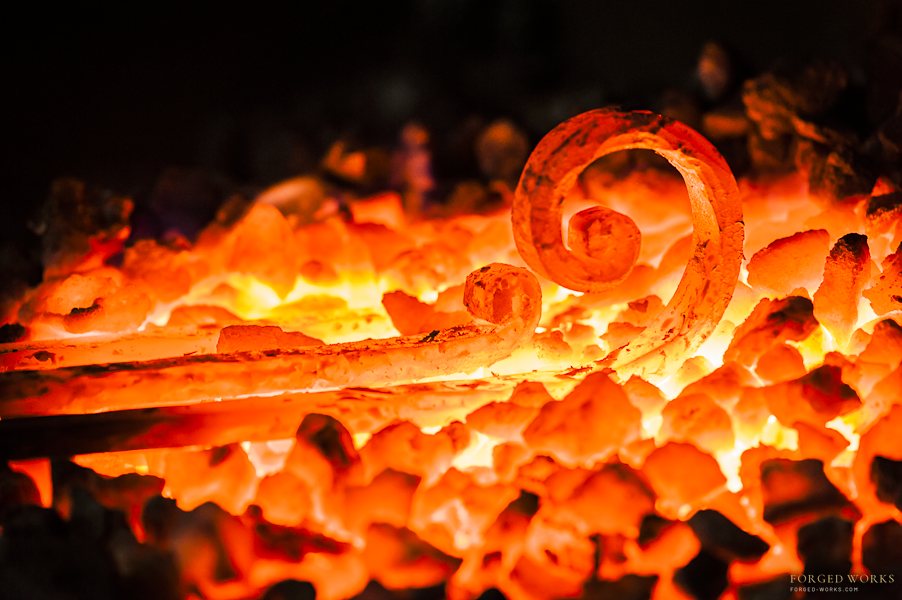
A forged scroll starts at the end. The end is drawn out first: tapered, spread or rolled. Only then is the rest bent hot. A machine bends bar cut to length, cold. The end is the saw cut, sometimes pressed flat, but as thick as the rest.
The cross-section
Where the hammer worked, the cross-section changes: thinner towards the end, wider at a leaf, thicker at a ball. Rolled bar stays the same over its whole length.
The surface
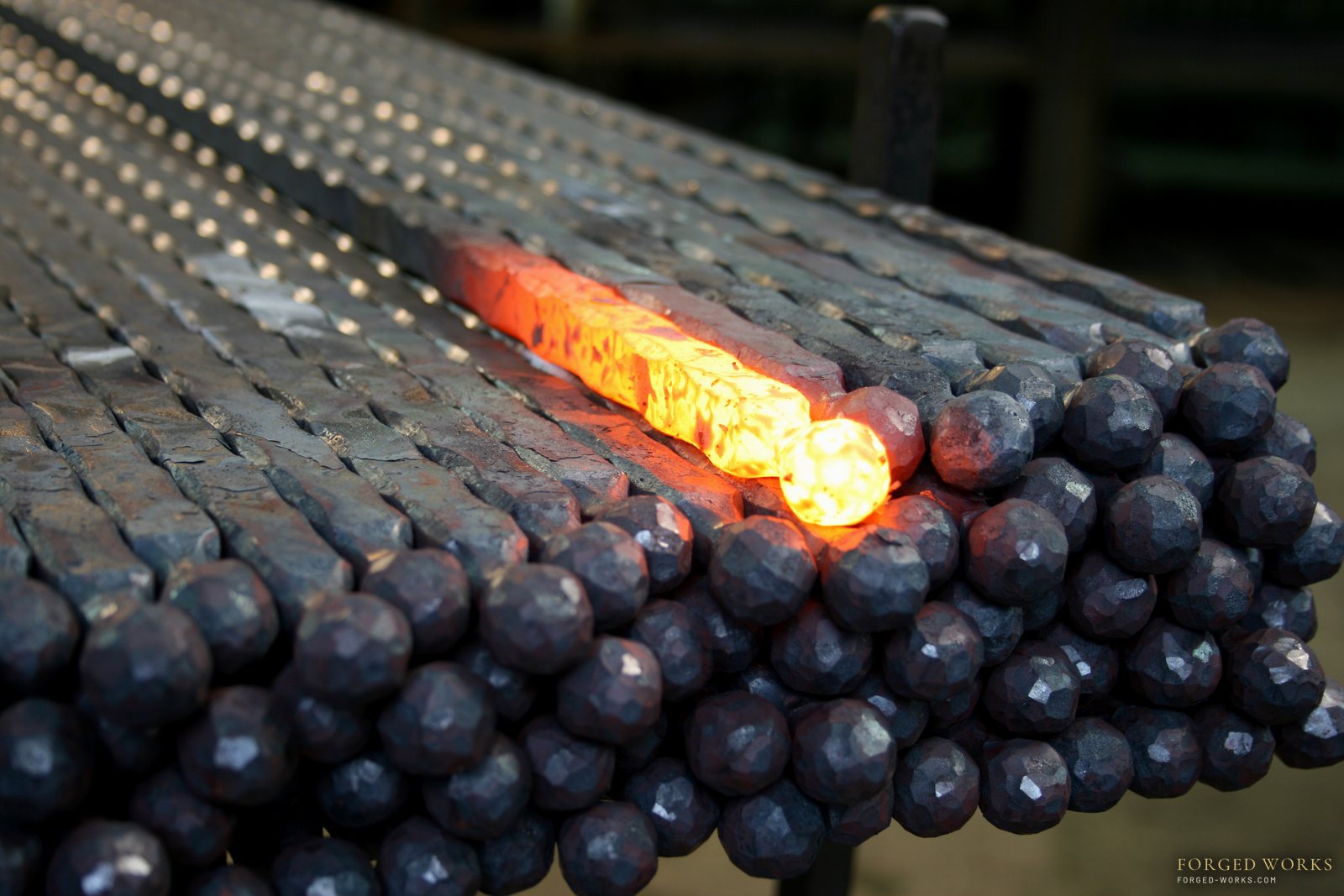
Forged steel carries hammer marks and scale, spread unevenly. A hammered pattern can also be rolled in by machine. Then it repeats at even spacing.
The joint
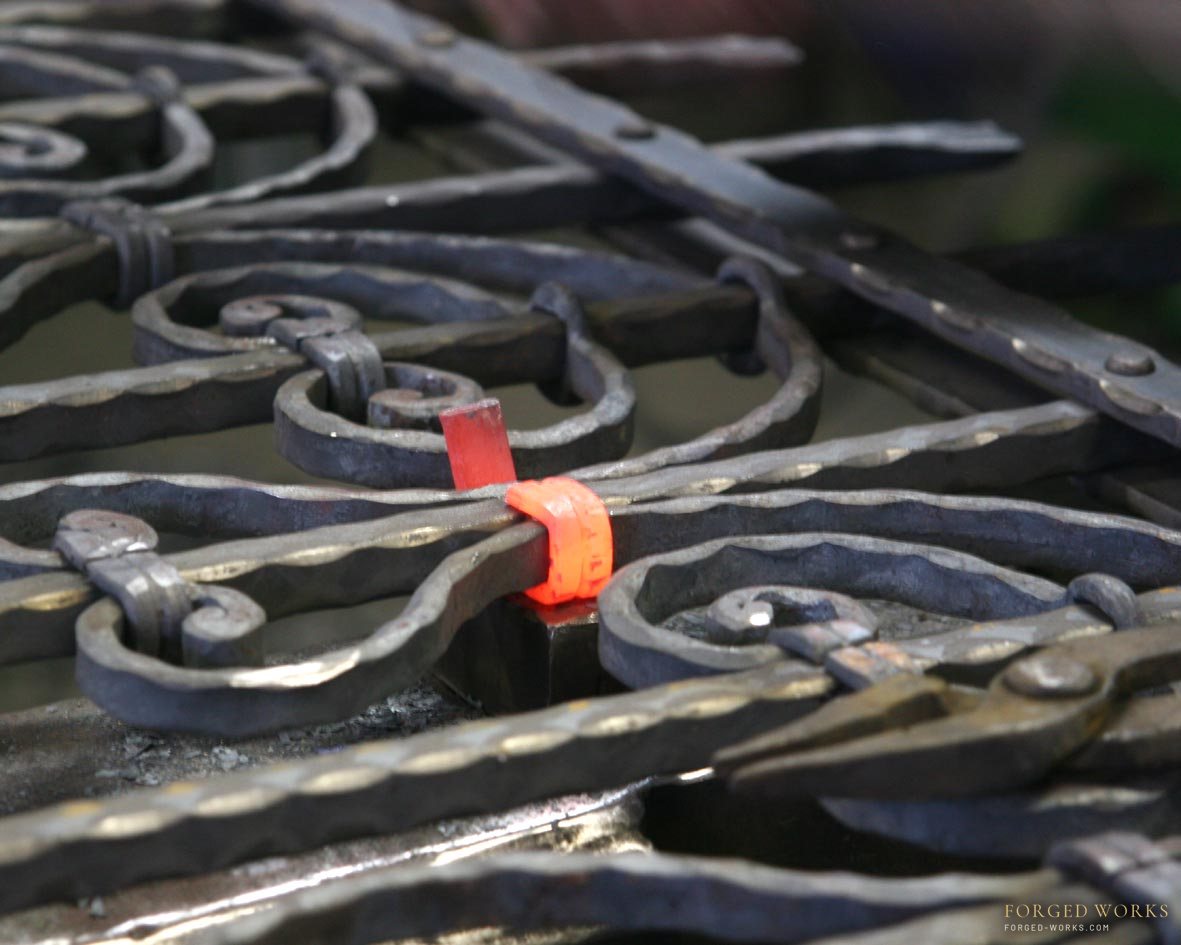
We join parts with collars: cut to length, bent and driven on hot over the joint. As the collar cools, it shrinks tight. Where a weld helps assembly, it disappears under the collar. On mass-made elements you see the weld seam or the spot weld.
Piece by piece
Parts forged by hand are never quite the same. Ours vary slightly from piece to piece. Twenty perfectly identical parts came out of a machine.
The price
A scroll that sells for less than a euro was not forged by hand. The time at the fire alone costs more.
Is machine bent worse?
Not necessarily. Bent elements are even and cheap, and for many fences that is enough. Forged parts are for those who complete an old railing, sell forged work, or simply want to see the difference.
Who forges here
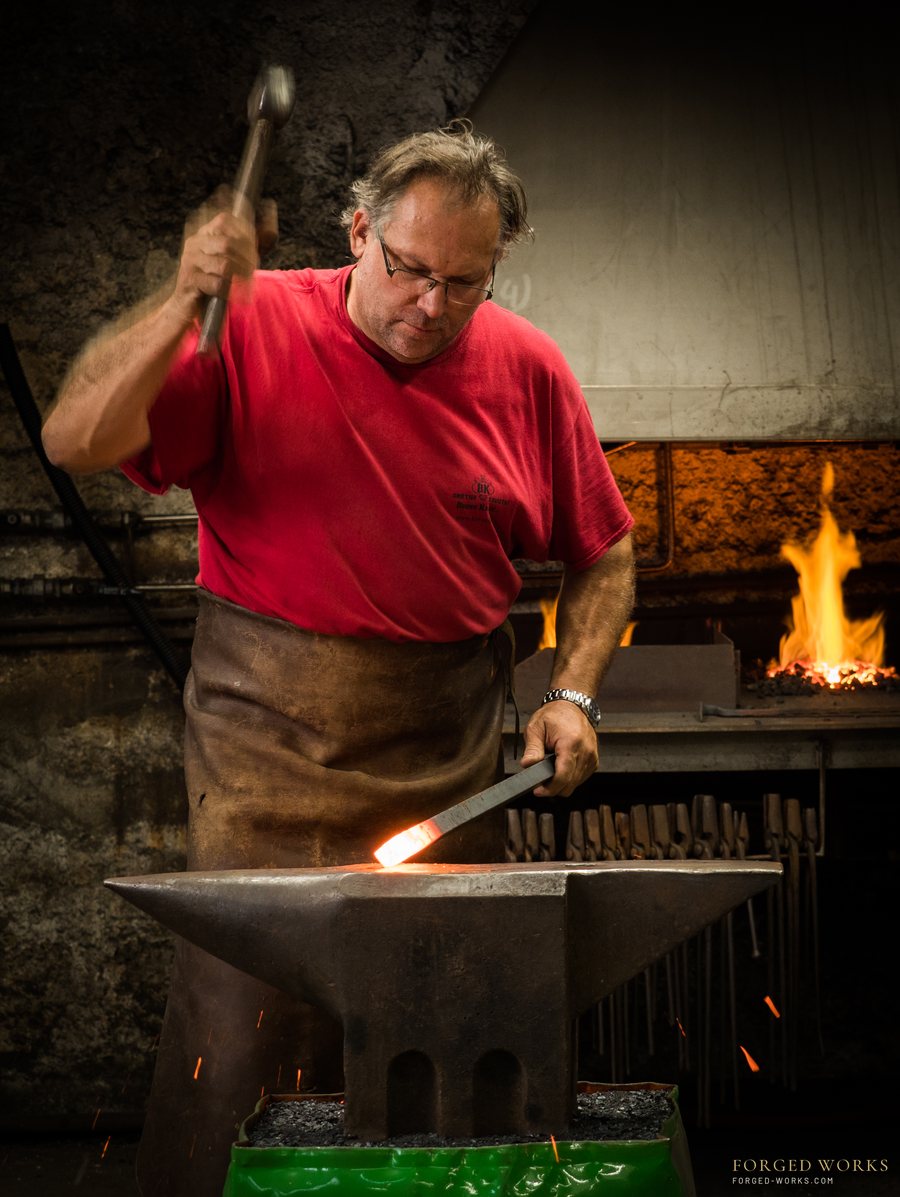
Bruno Kalčič has been at the anvil for 42 years and has run the forge since August 1989. Gregor, 28 years with us, and Benjamin, Bruno's son, forge with him. The forge is in Blejska Dobrava, near Lake Bled in Slovenia.